
How to set up a studio interview that looks right on air
Daniel Hartley
8 min read
A practical walk through preparing a guest, framing the shot and lighting a studio interview so the finished piece sits cleanly in a television news segment.
Start with the guest, not the camera
Most problems in a studio interview begin before anyone touches a light. A guest who arrives unsure why they are there, how long it will take or what the first question will be tends to sit stiffly and answer in short, guarded sentences. I ask our bookers to send a brief note the day before covering the topic, the approximate running time and where to park in Cambridge. It costs a few minutes and saves far more in the room.
On the day, we greet the guest away from the set first. A cup of tea, a quick chat about the story and a plain explanation of what will happen next lowers the temperature considerably. People are far more natural when they feel looked after than when they are walked straight under hot lamps.
We also ask what they are wearing in advance where we can. Fine checks, tight stripes and bright white shirts all cause trouble on screen, and a gentle suggestion beforehand is easier than a request at the door.
Finally, we agree a signal. A raised finger from the producer means pause, and the guest knows they can restart an answer without embarrassment. That small permission often produces the best take of the session.
- Send the topic and timing the day before
- Meet the guest away from the set first
- Mention clothing that tends to cause trouble
- Agree a simple signal for restarting an answer
Choosing a frame that suits the story
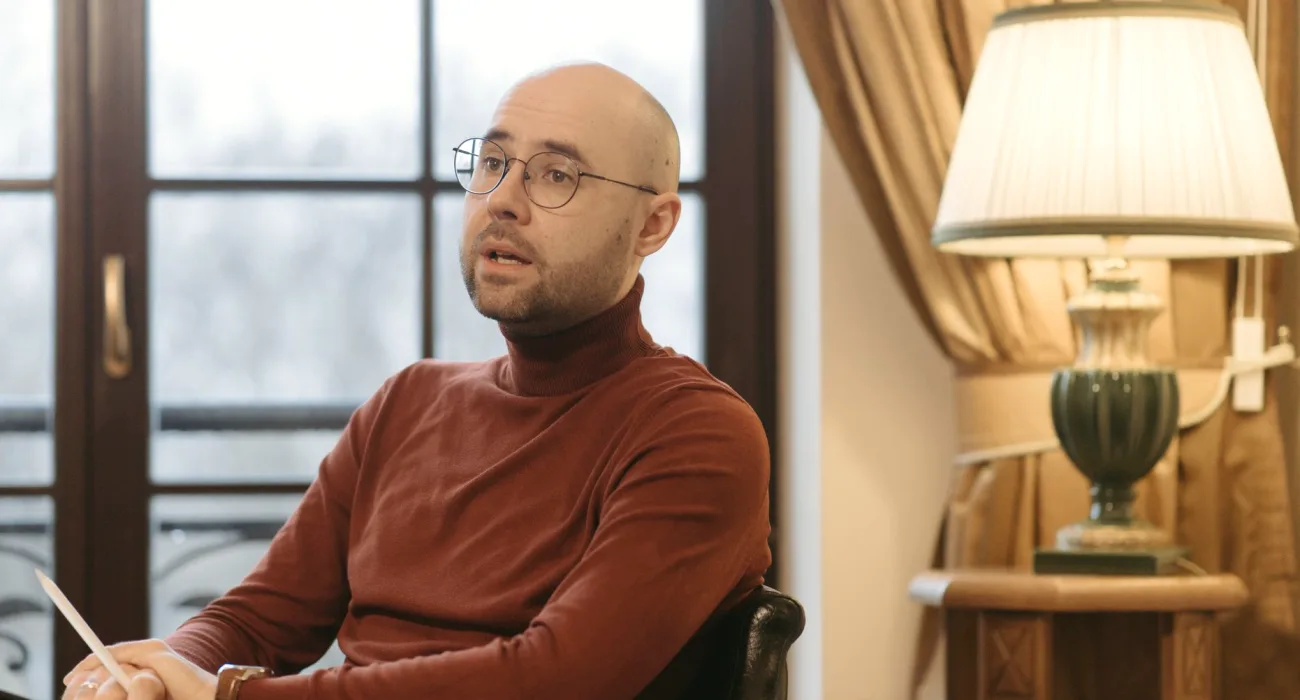
A news interview is usually cut into a short segment, so the frame has to work at small size on a television and on a phone. We favour a medium close-up, with the guest's head and shoulders filling a comfortable part of the picture and a little headroom above. Leave too much space and the face shrinks; crop too tight and the guest feels interrogated.
The eyeline matters just as much. Placing the interviewer beside the lens, rather than behind the camera at a distance, keeps the guest looking almost at the audience without the glare of a direct stare. For a serious subject we hold the shot steady and let the pauses breathe.
Offset the guest slightly to one side and let them look into the open space of the frame. This gives the picture balance and leaves room for a name caption without covering the face.
If the piece may be cut with a second angle, we set that camera wider and slightly higher. Having two sizes of shot gives the editor somewhere to go when an answer has to be trimmed.
- Medium close-up with modest headroom
- Interviewer positioned close to the lens
- Guest offset, looking into open space
- A wider second angle for the edit
Lighting a face so it looks natural
Good studio lighting is mostly restraint. Our usual starting point is one soft key light placed a little above eye level and to one side, a gentle fill on the opposite side to lift the shadows, and a small back light to separate the guest from the background. Rachel Osei, who manages our studio, begins by switching everything off and adding one source at a time, so each light has a clear job.
Hard light exaggerates lines and tiredness, so we diffuse the key and keep it close enough to be flattering without being dazzling. Guests who wear glasses need a slight change of angle to avoid reflections, and a small movement of a few inches usually clears them.
We watch skin tone on a monitor rather than trusting our eyes. Rooms that feel warm to the people in them can look orange on screen, and the camera's white balance has to be set under the lights actually in use.
Last, we check the background for clutter, bright windows and anything that sits directly behind the guest's head. A plain, softly lit wall with some depth between it and the guest does more for a face than any piece of set dressing.
- One soft key light slightly above eye level
- Gentle fill to lift shadows
- Back light to separate guest from background
- Set white balance under the lights actually used
Sound is half of the interview
Viewers forgive a modest picture far sooner than muffled speech. We use a small clip microphone on the guest, placed on the chest away from jewellery and collars, and we always record a spare track from a second microphone. The cable is tucked out of sight and given a little slack, so the guest can shift without tugging at it.
Before the first question we ask the guest to say what they had for breakfast. It sounds trivial, but it gives us a natural voice level and tells us at once if the signal is too hot or too quiet. We listen on headphones throughout, not only at the start.
The room itself needs attention. Fridge hum, air conditioning and the rumble of traffic outside all build up quietly, so we switch off what we can and note any noise that cannot be stopped.
If a lorry passes or a phone rings, we stop, let the sound clear and ask the guest to repeat the last answer from the start of the thought. Fixing it in the room is quicker than disguising it in the edit.
- Clip microphone placed clear of jewellery and collars
- Record a spare audio track
- Ask a throwaway question to set levels
- Listen on headphones for the whole session
Directing the conversation itself
The interviewer sets the tone more than any piece of equipment. We keep questions short, open and in a logical order, and we avoid stacking two questions into one. A guest who is given room to finish a thought usually returns to the point with something sharper than their first answer.
We ask for answers that stand alone. If a guest says, 'Yes, as I said earlier,' the editor has nothing to use, so we gently ask them to restate the idea in a full sentence. This is a request about the cut, not a criticism of the guest, and most people are glad to do it.
Silence is a useful tool. After an answer ends, we wait a couple of seconds before speaking. Guests often fill the gap with the most honest line of the interview, and the pause costs nothing to cut if it is not needed.
Near the end we ask whether there is anything the guest expected to be asked and was not. It rarely takes long, and it sometimes produces the closing line a producer is looking for.
- Short, open questions, one at a time
- Ask for answers that make sense alone
- Leave a pause after each reply
- Close by inviting anything missed
After the guest leaves
Once the guest has gone, we do not strike the set at once. The producer marks the strongest takes while they are fresh, notes any tangles of timing, and checks that picture and both sound tracks are really on the cards. A few minutes spent now spares the editor hunting for a missing clip later.
We label files plainly with the guest's name, the subject and the take number, and copy them to a second drive before anything is formatted. Priya Nair, our lead editor, would rather receive a short, accurate note than a long, vague one, so the producer writes down the best quotes with their timecodes.
If a caption is needed, we confirm the spelling of the name and title with the guest before they leave the building. Corrections after broadcast are far more awkward than a question asked on the way out.
Then we reset the room, leaving the chairs and lights as we found them. A tidy studio makes the next booking calmer for everyone.
- Mark the best takes while they are fresh
- Back up to a second drive before formatting
- Confirm name and title spellings for captions
- Send the editor timecoded notes
A studio interview that looks effortless on air is usually the result of small, sensible choices made earlier: a guest who feels informed, a frame that reads at small size, soft and honest light, clean sound and an interviewer who listens. None of it is complicated, but all of it takes a little time. If you would like to talk through a particular segment, get in touch and we will gladly go through it with you.