
How to Map a Shoot-to-Air Workflow Before the Next Breaking Story
Rachel Osei
7 min read
A practical walk through organising shoots, ingest and approvals in a newsroom, so a story that is filmed in the morning is not still waiting for sign-off in the evening.
Start by drawing the route a story actually takes
Before changing anything, sit down with the people who handle a story and draw the route it really takes, not the one written in the procedures folder. Begin at the moment an editor says yes to a shoot and end at the moment the package leaves for transmission. Mark every handover: editor to producer, producer to crew, crew to ingest, ingest to edit, edit to approval, approval to playout.
Most newsrooms find that the delays are not in the filming or the cutting. They sit in the gaps between people, where a file waits for someone to notice it or a question waits for someone to answer it. A paper diagram on a wall, with each handover marked by a name and not a department, shows this faster than any meeting about efficiency.
Walk through two recent stories on the diagram, one that ran smoothly and one that dragged. Note the clock time at each handover. The difference between the two usually points to one or two stages that deserve attention first, and that keeps the work small enough to finish.
- List every handover from the first decision to playout
- Name a person at each handover, not just a team
- Record clock times for one fast story and one slow one
- Pick the two longest gaps as the first things to fix
Brief the crew so the footage arrives usable
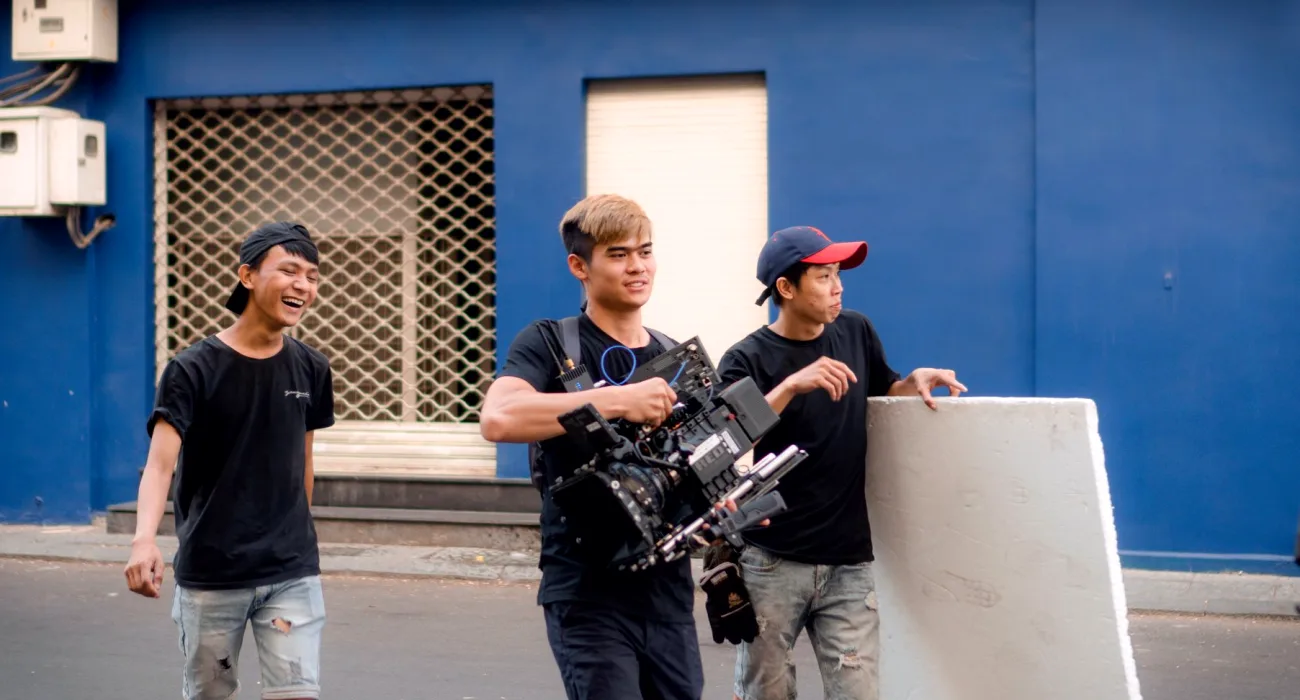
A crew sent out with a vague instruction brings back vague footage. A short written brief, sent before the van leaves, saves more time than any editing trick. It should state the angle of the story, the people who must be seen or heard, the deadline for the first file, and the format and frame rate the gallery expects.
From my side of the work, in the studio and with lighting, I see how much depends on small details given early. Tell the crew whether the piece will sit beside studio material, because that affects colour, exposure and how a face is framed. A mismatch between location footage and a studio interview is easy to prevent and costly to repair afterwards.
Agree one route for questions while the crew is out. If the camera operator has to ring three different people to learn whether an interview is still wanted, the shoot loses its best light. One named contact on the desk, reachable by phone, keeps decisions quick and keeps the crew filming.
- State the angle, the must-have voices and the first-file deadline
- Specify format, frame rate and whether studio material will sit alongside
- Name one contact on the desk for questions during the shoot
Make ingest a fixed routine, not a favour
Ingest goes wrong when it depends on whoever is free. Give it an owner for each shift and a fixed routine: files are copied from the card to two places, checked for playback, named to a set pattern, and logged before anyone starts cutting. It sounds fussy until a card is reformatted by mistake and the only copy is gone.
A simple naming pattern does most of the work. Use the date, a short story slug, the camera letter and a running number, and keep it the same on every job. An editor who can tell from the file name what a clip is and where it came from does not need to open ten files to find the one they want.
Decide in advance where material lands and how long it stays there. Fast storage for live stories, a slower archive for the rest, and a rule for clearing the first into the second. When everyone knows where a file lives, the question of where it has gone stops appearing on the desk during a busy afternoon.
- Copy every card to two locations before cutting begins
- Use one naming pattern: date, story slug, camera letter, number
- Assign an ingest owner for each shift
- Set a rule for moving finished stories to the archive
Shorten approvals without removing anyone's judgement
Approvals are where a finished package most often waits. The aim is not to remove checks but to make them quicker and clearer. Decide who has the final say on each kind of story, and name a deputy for when that person is away from the desk. A package that needs one signature should never be waiting on someone who has gone home.
Ask for feedback in a set form. A reviewer who writes timecode and a short note, such as a change of caption at a given point or a line to trim, gives the editor something to act on. A reviewer who says it does not feel right sends the editor back to guess, and the delay doubles.
Limit the rounds. For a same-day story, agree that there is one review pass and one correction pass, then it goes. Where a legal or accuracy question comes up, route it to the person who can answer it directly, instead of passing it along the chain of people who cannot.
- Name a final approver and a deputy for each story type
- Give feedback as timecode plus a short note
- Allow one review pass and one correction pass on same-day stories
Test the changes on a quiet day, then on a live one
Introduce changes in two steps. First rehearse the new routine on a quiet day with a story that does not matter much, and time it against the diagram you drew at the start. This shows where the new steps are clumsy, and it lets people ask questions without an air time bearing down on them.
Then use it on a real story, but choose one with a comfortable deadline. Ask each person at a handover to say what slowed them and what helped. Keep these notes short and write them down while they are fresh, because by the next week everyone will remember the story and forget the small frictions.
Review after a few weeks and compare the clock times with the original two stories. Expect modest gains, not a transformation. A newsroom that moves a package from shoot to air a little sooner, week after week, and does so without more mistakes, has changed something that lasts into the colder, darker weeks when daylight for shooting is short.
Keep the routine light enough to survive a bad day
A workflow that works only when everyone is calm will fail when it matters. Keep the written version to one page: the route, the names, the naming pattern, the approval rules. Pin it where people work, and keep a copy beside the ingest station, where it will actually be read.
Review it when staff change, when equipment changes, and when a story goes wrong. Each failure is information about a handover you had not noticed. Add one line to the page, not a new procedure, and retire any rule that nobody follows, because an ignored rule teaches people to ignore the others.
Outside help is useful at one point in particular: the first mapping. Someone who does not sit in your newsroom can see the waiting that insiders have stopped noticing. After that, the routine belongs to your desk, and it should stay small enough that the producer on the early shift can run it half asleep.
- Keep the written routine to a single page
- Add one line after each failure instead of a new procedure
- Remove rules that nobody follows
A faster route to air comes from small, named, written decisions rather than new equipment: a drawn map of handovers, a short crew brief, a fixed ingest routine and a limited approval pass. Try them on a quiet day first, measure against a story you already know, and keep only what shortens the wait without costing accuracy. Most desks find two or three gaps hold nearly all the delay.